

With the approval of Complementary Bill No. 68/2024 (“PLP 68/24”) and the publication of Complementary Law 214/2025 (“LC 214/25”), the Tax Reform (Constitutional Amendment No. 132/2023 — “EC 132”) enters a new phase: the publication of rules and procedures for putting the changes brought by the reform into practice.
The main changes that will directly impact companies’ operations are:
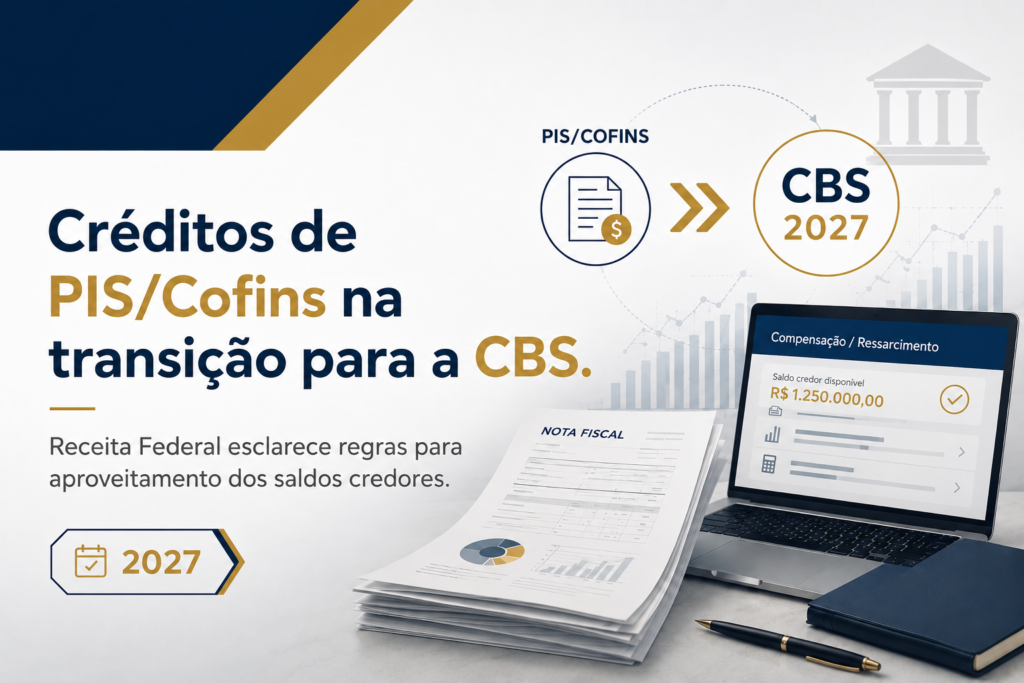
- Extinction of the PIS and Cofins contributions, which will be replaced by the CBS
- Extinction of ICMS and ISS, which will be replaced by the IBS
- Creation of the Selective Tax
- Full non-cumulativity for CBS and IBS
- Taxation at the point of consumption
- CBS and IBS will not be part of the sale price
- Implementation of the reference rate and revocation of tax benefits to ensure the Principle of Neutrality
- Split Payment as a payment mechanism
Full non-cumulativity, if applied correctly by the tax authorities, could be an opportunity, since for some companies it will result in an increase in profit margin.
On the other hand, the application of the Principle of Neutrality is a risk factor for companies that benefit from tax incentives and that structured their businesses around those benefits. It also represents a challenge for taxpayers in the services sector, currently subject to ISS at a maximum rate of 5%, who will become subject to IBS at a minimum rate of 17.7% — although some studies already point to a rate of 18.7%.
Another relevant point concerns the impact on companies’ cash flow from the adoption of Split Payment. Several sectors currently operate on tight margins and use the taxes billed to their customers as working capital, holding those amounts in cash for up to 55 days. Under the new system, companies will no longer have access to these funds, which could affect not only cash flow but also financial liquidity, making it harder to meet financial obligations.
Given these changes, companies need to:
- Map the risks and opportunities brought by the reform
- Update their ERP to support the new tax structure
- Review their commercial contracts to align them with the new tax rules
- Develop a new pricing policy
- Analyze the impacts on their cash flow
- Provide training for their employees
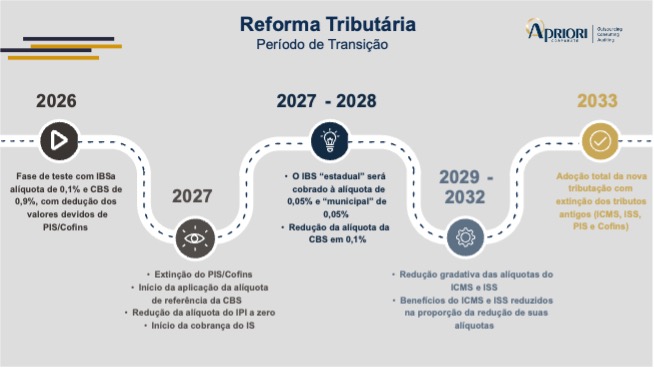
Regulation of the Tax Reform is underway, but, as provided for in LC 214/25, there will be a seven-year transition period, starting in 2026. Full implementation is set for 2033; however, PIS and Cofins will already be extinguished in 2027, along with the start of the Selective Tax (IS).
Below is an illustration summarizing the main changes and their respective effective periods.
Do you have questions about how the tax reform will impact your operations? Get in touch with our specialists.